
Food with a regional address
Sacramento’s farm-to-fork identity reflects its position near productive agricultural regions and its public emphasis on relationships among growers, markets, restaurants and diners. Visit Sacramento describes the program as a celebration of food grown in the surrounding region, with events and dining initiatives that change over time. A market scene makes the idea tangible: temporary stalls, seasonal produce and public space bring the supply chain into view without pretending that every item traveled the same distance.
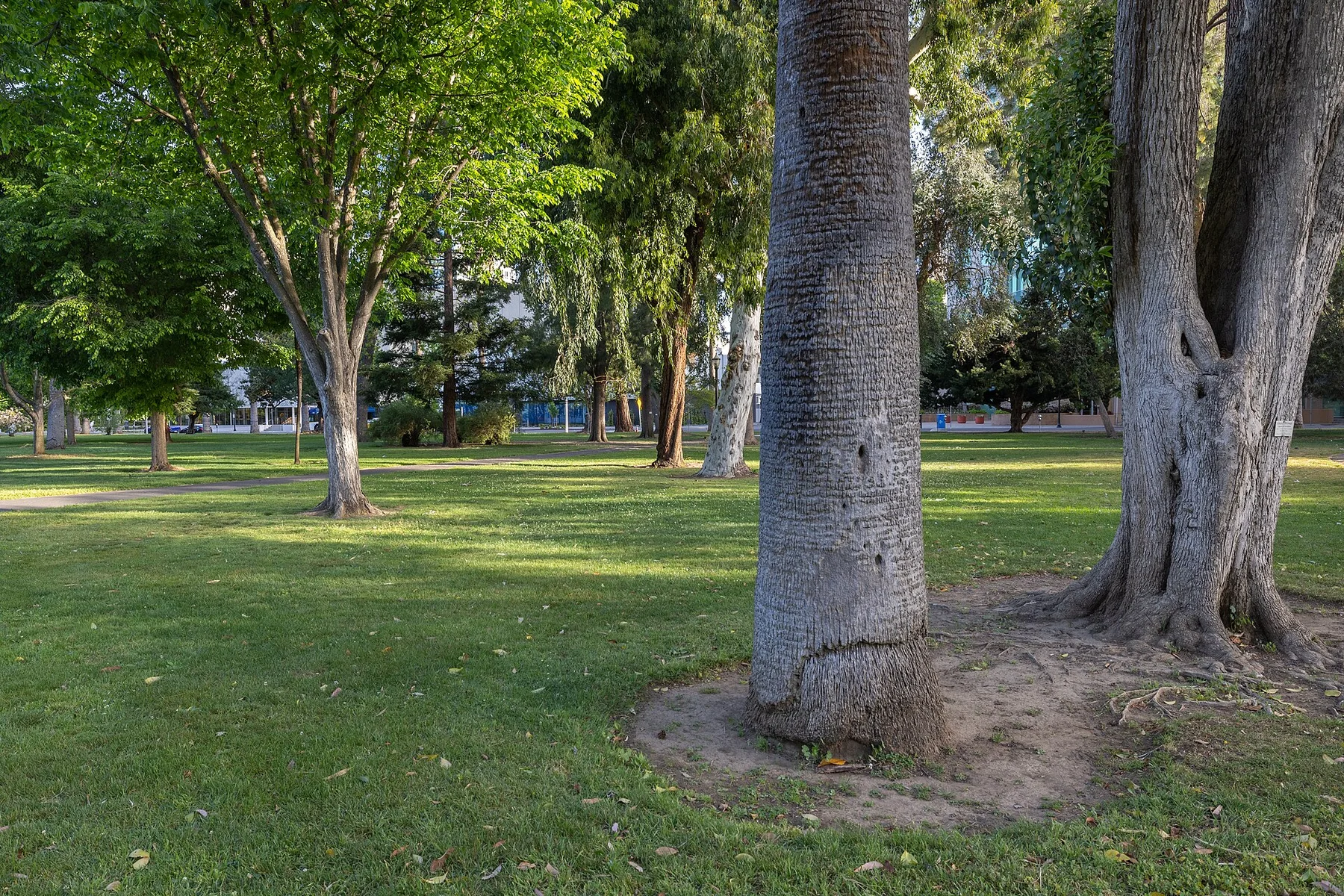
“Farm-to-fork capital” is promotional language, not a technical designation. Its useful local meaning comes from the activities behind it—markets, producers, chefs and consumers—and from checking current event information at the source. The photograph here shows mature trees in California State Capitol Park and represents the other half of this feature: Sacramento’s extensive, actively managed urban canopy.
An urban forest is managed infrastructure
The City of Sacramento’s Urban Forestry program maintains public trees and provides information about permits, planting, pruning and service requests. The city’s Urban Forest Plan treats the canopy as a long-term system with environmental and community functions. That work requires inventories, species choices, inspection, maintenance and coordination across public and private property. “City of Trees” is therefore more than a visual nickname; it points to ongoing management.
Public-tree responsibilities are not identical to responsibilities for a tree on private property. Residents should use the city’s current guidance to identify the appropriate process before pruning or removing a street tree. A website summary cannot determine ownership, condition or responsibility at a particular address.
The city’s plan is a planning document, not an inspection report for an individual tree or parcel. Conditions change over time, and questions about a specific tree belong with the responsible property owner, association, qualified professional or city service. Current records and direct observation are more useful than a neighborhood-wide assumption.
A practical insurance connection
Markets and trees do not predict whether a home, condominium or rental building will have a covered loss. They do suggest useful recordkeeping habits. Property owners can document exterior conditions, keep invoices for professional tree work, photograph improvements, and notify the appropriate insurer when occupancy or use changes. Condominium owners should clarify which exterior areas belong to the association. Landlords should separate building records from a tenant’s personal property, which is ordinarily the tenant’s responsibility.
Coverage for falling trees, debris removal, damaged landscaping, business activity or temporary structures depends on the event, the property involved, the policy language, exclusions and limits. The California Department of Insurance’s residential guide explains the major sections of common personal-property policies but does not replace the issued contract. Review the declarations and endorsements and ask about any use that falls outside ordinary residence activity.
Official sources: Visit Sacramento’s farm-to-fork program, the city’s Urban Forestry service and Urban Forest Plan, plus the California residential insurance guide.