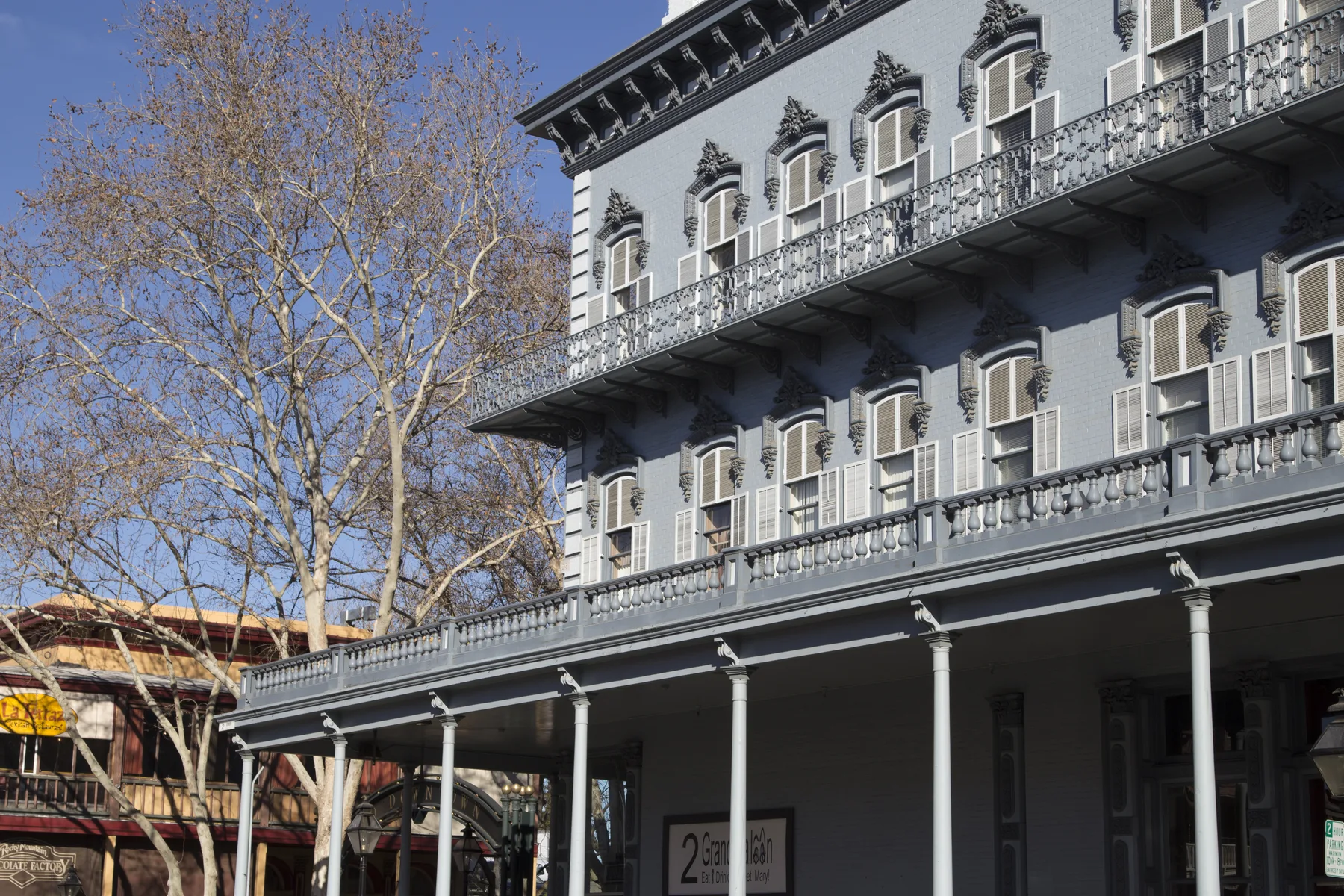

A district built around movement
Old Sacramento State Historic Park preserves a riverfront district closely tied to the Gold Rush, commerce and the growth of western railroads. The setting makes the relationship visible: streets, commercial buildings, levees, rail alignments and the Sacramento River sit within a compact area. California State Parks owns and operates original and reconstructed buildings in the park, while institutions in the district interpret transportation, business and community history.
The California State Railroad Museum presents locomotives, cars, artifacts and stories from the development of rail transportation in California and the West. Its official visitor material also points beyond the main museum building to outdoor and excursion experiences. Because schedules, exhibits and access vary, the museum’s current site is the appropriate source for planning rather than a static travel summary.
Architecture is evidence
The upper stories along Old Sacramento’s blocks reward a slower look. Repeated windows, ironwork, cornices, shutters and covered walks show how commercial buildings presented themselves and responded to weather and street life. Individual structures have their own histories, and reconstruction means the district should not be described as untouched. Its value lies in the assembled record and the interpretation of change.
Railroad equipment tells a parallel story. A preserved locomotive or passenger car is not merely large machinery; it is a collection of materials, design choices, maintenance practices and documented provenance. Museums use records and conservation standards to explain what is original, what was repaired and why an object matters. That distinction keeps the public story accurate.
The state park and railroad museum should be checked directly before a visit because access, programs and exhibits can change. Their official material also helps separate the historic district from the broader modern city. That distinction is important: a landmark description can explain a place, but it cannot supply property facts for a particular address. Parcel condition, occupancy, construction and ownership must come from current records for that property.
A practical insurance connection
Nothing about a visit to Old Sacramento determines insurance eligibility, price or coverage for a nearby property. The useful connection is documentation. Owners of houses, condominium units and rental properties can keep dated photographs, improvement invoices, appliance details and inventories of significant belongings. A condominium owner should also obtain the association’s current governing documents and master-policy summary, because the boundary between association and unit-owner responsibilities can vary.
For a rental property, confirm occupancy, building use and responsibility for fixtures before comparing forms. A dwelling form, landlord package or other property policy may define covered property and perils differently; do not rely on the product name alone. The California Department of Insurance recommends reading the declarations and the full policy, comparing conditions and exclusions, and asking questions before purchase. The issued contract and endorsements control.
Official sources: Old Sacramento State Historic Park, the California State Railroad Museum, and the California residential insurance guide.